Sunday, December 14, 2025

Intertwined

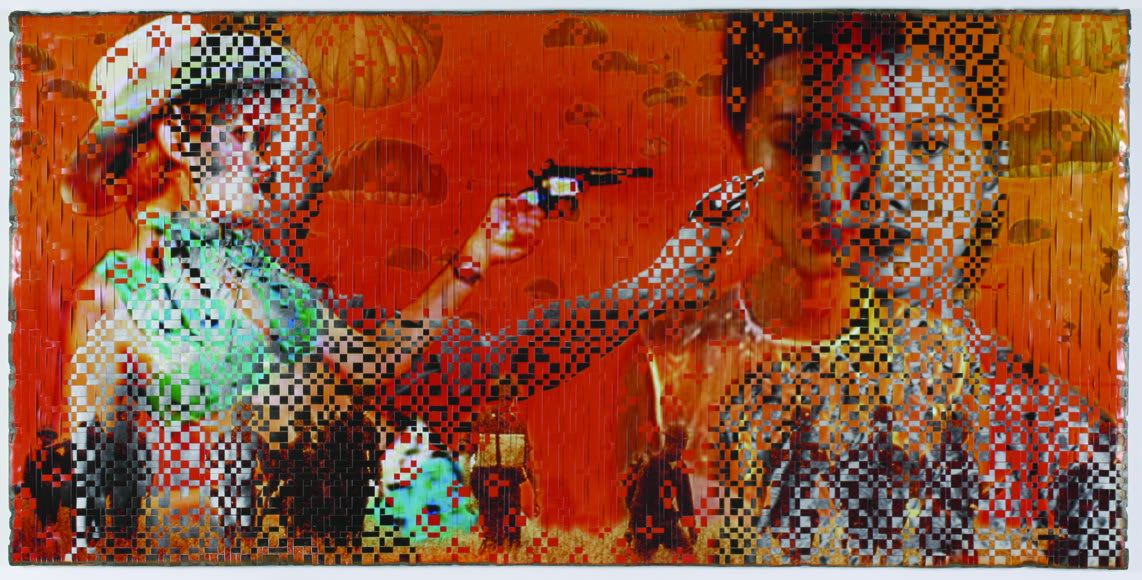
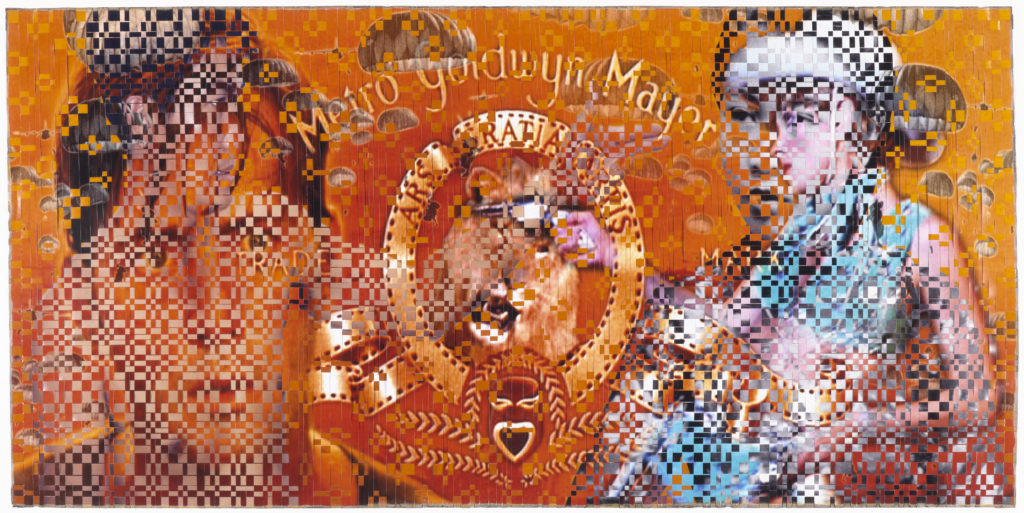
After our research in class about Danh Vo and his artwork, I decided to research other Vietnamese artists. One that I found and wanted to explore more was Dinh Q. Le and his artwork series called “From Vietnam to Hollywood.”


This series is a collection of images that are woven together, inspired by the weaving of Vietnamese grass mats. Each piece weaves together images from Hollywood movies of the Vietnam War with photos taken by photographers during the war. 


This series of works demonstrates how history takes on conflicting perspectives, similar to what Bui was discussing about the Saigon Execution photo. By weaving together these photos, Le highlights the different versions of the Vietnam War presented by Hollywood versus actual photos of the events. The choice of using colored Hollywood images and black-and-white photos further highlights the contrast between the two perspectives. Additionally, the colored images stand out much more than the photographs, illustrating how the American perspective of the war tends to dominate depictions of the Vietnam War without much consideration for other perspectives. Viewers have to spend time with the artworks to fully see both images, in the same way people have to spend time to realize both sides of the Vietnam War. Furthermore, the photographs create a shadow-like image of the movie still. This emphasizes that, despite these movie stills dominating modern ideas of the Vietnam War, there is still an underlying reality. Even though Western perspectives are more well-known, Vietnamese perspectives are still underlying and will always exist, even if they are shadows. Both perspectives will always be intertwined, literally woven together. Through the work of artists like Le and many other advocates, Vietnamese perspectives are slowly leaving shadows and finally coming to light.


Sunday, December 7, 2025

Cultural Identity and Assimilation

Whenever I read stories of immigrants, I feel like I don’t relate to them in the same ways that most immigrants do. I’ve never really felt like I faced the struggles of trying to assimilate that most immigrants describe. I felt more like an “other” in the opposite way. In Troy, with such a large Indian population, I’m more surrounded by my culture than most other immigrants are. Yet I don’t feel connected enough to it. I’m assimilated too much. I don’t relate to what other kids say about our “shared” culture. 


This feeling is kind of a background presence in my life. I mostly just ignored it and dealt with the vague, uncomfortable feeling that came with it. Once, on a field trip in Washington, D.C., I overheard some kids talking about Hindu mythology on our bus back to the hotel. They were teasing one kid who had made a minor mistake in his recollection of a story. It was all light-hearted, and they quickly moved on to other topics, but listening to that conversation reminded me of my lack of cultural identity. That kid who made the mistake, who was teased for something that small, knew more than I ever did. It felt like I was too American, while everyone else was the perfect blend of both cultures. I was ashamed to be too American will in a bus sitting in front of the White House. 


My grandfather provided me with one of my strongest connections to India. He spoke the most English of any of my grandparents, so he was the one I talked to the most. Even through our stilted conversations, I still felt a connection to him (I still maintain that I am his favorite grandchild). He passed away before I ever got to see him in person. When this happened, it felt like I lost all the connection I had, since I never talked to any of my other grandparents. 


Thi’s trip back to Vietnam in her twenties reminded me of my own trip back to India when I was 13. It was my first time going back there since my family moved to the US a decade prior. Visiting family that I couldn’t even connect with constantly brought that uncomfortable feeling back. My chest always tightened whenever I had to interact with anyone, since I couldn’t speak the language at all. I felt so isolated, while most of my friends loved visiting India when they could. The only person I could kind of connect with was my cousin. He didn’t speak any English at all, but little kids don’t have the same qualms about cultural identity that adults have. He was perfectly fine interacting with me without talking. You don’t need a language to communicate that a toy truck just did a really cool flip. Playing with him helped me let go of some of the internal resentment I held toward India. It reminded me that I still hold some connection to my culture, even if it manifests differently.

Read this for more about cultural identity