Sunday, September 21, 2025

Home?

I wasn’t technically born here, but I moved to the US so young that I don’t even remember India. I’ve never known what it’s like to live in India, or even visit. I moved to the US when I was three, and I never even visited India again until I was thirteen. In my head, India was just a place where some of my family lived, where I was technically supposed to be from. It felt like I wasn’t from anywhere. I couldn’t say I was from Michigan, because even though I’ve lived here for 2/3 of my life, I still wasn’t from here. And I wasn’t from India, because how could be from a place I don’t remember at all? A place where I don’t even speak the language? 


I remember one time when I was in the car with my dad. He told me that he would’ve preferred to stay in India, but my schooling would be better here. That moment stayed with me for months, and probably will for years. It had never occurred to me until then that my parents didn’t feel like Troy was their home, at least not completely. India was their home, where they grew up. But this revelation scared me. India wasn’t my home, not really. It was just a vague part of my identity. But my parents had literally given up their home for me. They had moved across the world for me. It probably wasn’t just for me, I know that logically, but at the time it really felt like I was a weight on their shoulders. That feeling only added weight onto my shoulders. If they came here just for me, I have to be worth it. I have to able to get a good job, live a good life here. Dennis-Behn’s experiences in “Swimmer” reminded me of this conversation. It felt like we were both in the same boat, under that pressure of following the “perfect immigrant” path.


Another car conversation I remember is wondering where my parents would go after I graduated college. We don’t have a house, so it’s not like they’re super attached to Troy. They can cancel the lease to our apartment much more easily than trying to sell a house. My dad told me that he would’ve probably go back to India. That only brought up the earlier conversation in my head. It was a reminder that my home wasn’t their home. While reading how Dennis-Behn felt like her father abandoned her at college, I wondered if this was how I would feel. India is a place that’s unfamiliar to me, that’s incomprehensible without my parents. The one time I visited, I could have never survived without my mom there. So in a way, it feels like they’re going out of my reach. It feels like they’re abandoning me in this place that I thought was our home, and I’m just supposed to survive here. Their sacrifice of living here for so many years should have finally paid off, and I should be able to get a good job and live my life. 


One of my friends and I were having a conversation about what we would do after college. She wanted to go back to India. She had lived there much longer than I ever had, long enough to at least remember what it’s like. It still surprised me though. The whole point of my parents coming to America was for me to have the schooling here and to get a good job here. This moment is what came to my head when I read the last paragraph of “Swimmer.” Our versions of India and America are different. Her India is a place that’s familiar, where her parents grew up and her identity is. My India is a place that’s just out of reach, that feels like it should be familiar but just isn’t. 


To me, America feels like home. It’s the only place I’ve ever known. But it also doesn’t. If it was home, why do I have to work so hard to stay? How can you be an immigrant to your home? So, where is my home?



Sunday, September 14, 2025

Hallways

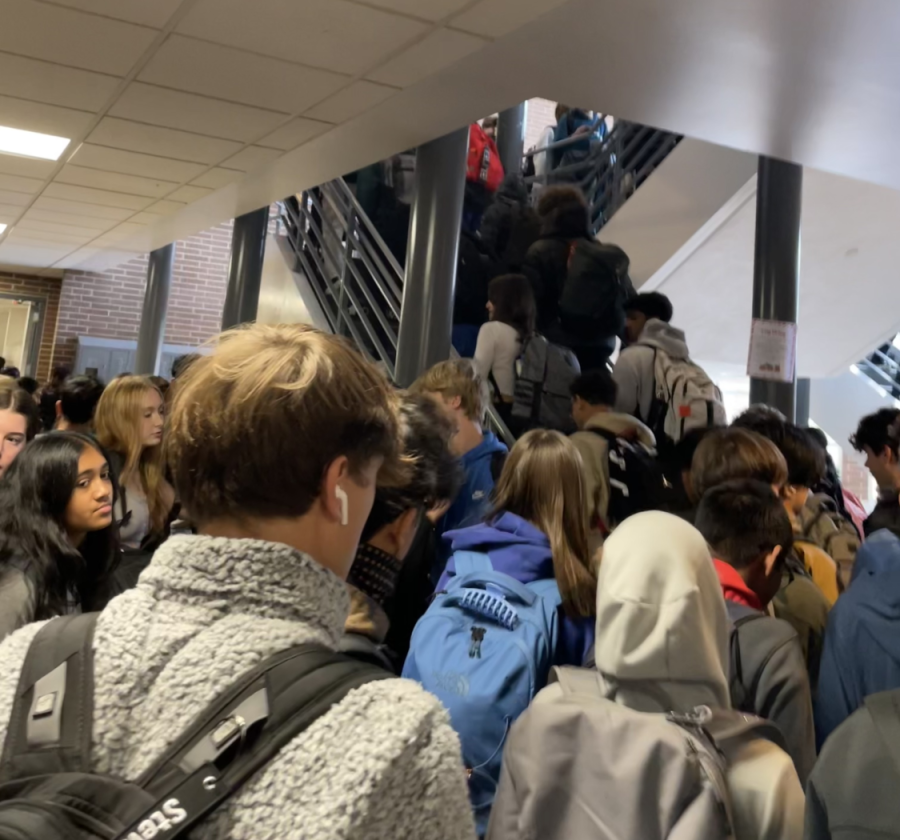
Photo Credit: Ashley Park


For David Foster Wallace, the main point of the average day seemed to be the grocery store. He spent a paragraph and a half just highlighting the misery of that one place. Well, for me the misery of my life is the Troy High School hallways. Those hallways will be the end of me. One of these days I’m just going to have to accept that I will never be able to walk to any class at a leisurely pace. It’s not even just the crowd of people, it’s also the sheer length of those hallways. Just to put into words how difficult those hallways are for me, I have Orchestra 3rd hour and GBBE 4th hour. If you don’t know, that means I have to walk down the ENTIRE Never-Ending Hallway, push through the A-Lunch crowd in front of the library, push through the crowd around the main staircase, and then walk almost to the end of the science hallway to room 315. Not to mention that I’m carrying my absurdly heavy backpack and violin throughout this trek. I’m still waiting for the day I make it to GBBE with enough time to actually get myself settled and relaxed instead of with one minute left to spend trying to get everything ready. The hallway length is definitely one thing that contributes to the torture of this journey, but I would say the bigger thing is the volume of the crowds. Being a short person only adds to this, because it feels like the crowd is around you and above you. Everyone is pushing and trying to be somewhere. Overall, this is definitely one of the worst parts of my day. 


But, I will admit, I do look at the hallways through only my view. Everyone else around me is being an inconvenience to me, trying to make me as late as possible to my next hour. But, I guess everyone else is also in the same predicament as me. They’re also trying to get their classes. And who knows, maybe someone has an even more outrageous combination than Orchestra and GBBE. Also, I’m sure I’m part of the problem for other people as well. I try to push through crowds because I have to get through, which I’m sure only causes more of the pushing that I lament. I also tend to use my violin to help me push my way through, forming a solid wall between me and the crowd. I’m sure someone has thought, “Why does that girl need to carry her violin like that? It’s hit my knee 10 times!” So really, we’re all the victims of and the perpetrators behind these horrible hallways. I glad to know that we’re all suffering together. Wait a sec, that came out wrong. I glad to know that we are all sharing this experience together. Ok, that’s better. But, seriously, thinking about this or other similar experiences in this way really does help you let go of some anger. Now, I’m not mad at the hallways. I’ve just accepted them as they are, while implementing my little efforts to improve them (like actually carrying my violin properly). 


See, I’m a changed person. Now, how can I apply this to homework, where most of my daily anger lies…

Sunday, September 7, 2025

Perspective

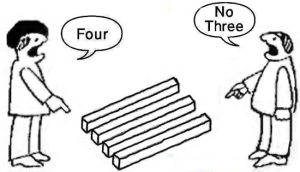
    The thing about history is that it’s all about perspective. Sometimes it’s hard to realize this, because most people are taught about history as a linear timeline, with concrete events and timings. However, this timeline is built based on tons of perspectives that are thrown together. After all, how do we know about what medieval England was like? Well, we know through the written records, artwork, artifacts, and architecture left behind, and every one of these things has a perspective behind it. There’s a person who wrote that manuscript, who painted that mural, who owned that clay pot, and who designed that church, and behind every person, there’s a perspective built on their life experiences. So, really, our entire understanding of history is based on the perspectives that have survived. 


                                                Photo Credit: Christy Geiger


    But what about the perspectives that have not survived? After all, a slight shift in perspective can drastically alter how a historical event is perceived. For example, in the poem “The History Teacher,” Billy Collins describes how the teacher taught that “the Enola Gay dropped one tiny atom on Japan.” While this is obviously a drastic minimization of what actually happened, this could technically be true. After all, it was just atoms that were dropped, except that those atoms were split to release massive amounts of energy and create one of the strongest bombs in the world. This example is an exaggeration of how history can shift between perspectives, but what about the real-life examples? 

    In the US, most history textbooks published omitted all important photographs of the Vietnam War until 1990, according to James Loewen, author of Lies My Teacher Told Me. The Vietnam War is known as one of America’s most controversial wars, considering the widespread opposition in the US against the war and the technical loss in the end. From the perspective of the US, it was a costly loss that didn’t seem to amount to anything. Teaching the details of this loss would only lead future generations of Americans to lose faith in our system. Only two decades after the end of the war have more textbooks started including personal experiences and focusing on the suffering during the war (Lachmann). Even now, as US textbooks are starting to show the true atrocities of the war, most textbooks still contain almost nothing about the suffering of the Vietnamese (Lachmann). Just last year, in my APUSH class, I remember only really learning about the My Lai massacre and maybe a vague sentence mentioning Vietnam’s war casualties. However, when looking at the war from a Vietnamese perspective, thousands of casualties are revealed, especially related to civilian deaths. By learning history through the American perspective, new generations of Americans don’t get to see the full picture of the war or learn from the past. The perspectives of Vietnamese civilians are lost to time, a piece of history that won’t survive. 


                                                   Photo Credit: Peyton Rodriguez


    There are serious consequences when history is lost. In “The History Teacher,” Collins continues to describe how the students bully other kids. This represents their lack of learning from history. When we don’t learn about the atrocities that come before us, we’re never able to improve our world. After all, how do we improve upon our past if we don’t even know what that past is? The point of history is about learning from as many perspectives as possible, ensuring that we can form as complete a picture as possible to understand an event. Preventing perspectives from being lost to time is crucial to ensuring a better future.