Sunday, October 19, 2025

Owl-Eyed

    You would think no one would have to tell me that Gatsby died. It should be the talk of the town with how many people attended those parties. Even I went to one, that week that I got drunk. Some woman named Roosevelt, she brought me. I could never remember her full name after that week, and I never saw her again. Nonetheless, I was surprised to hear what little buzz his death created. I only managed to find out from a few whispers.

    I figured everyone knew and it was just one of those unspoken things. Perhaps the closest of the random hundreds that attended those parties were invited to one final hurrah at Gatsby’s funeral. I certainly wasn’t invited, but I figured I could slip in to pay my respects. After all, the man bothered to get real books for his library, even if the pages remain uncut. That’s deserving of one more visitor before his official departure from this world.

    It was raining quite heavily the day of the funeral, so it was quite a hassle to get down to Gatsby’s house. It was likely overflowing anyway, so I planned to show up to the cemetery and wait near the back. I did not see nearly the procession I was expecting. When I saw those three cars go by, I figured it was another funeral happening the same day. But then I saw that man from the party I attended. We had discussed those books in the library, and I could just about see his face in the crowd of the car crash near the end of the night. Surely, he was here for Gatsby’s funeral and no other. I hurriedly rushed after them, rain pouring down and obscuring my vision. I guess my plan of hiding behind the crowds has fallen apart. I wiped my glasses so I could actually see the ceremony. As I put them pack on, the man next to me, who seemed to be a postman, murmured, “Blessed are the dead that the rain falls on.” It seemed that I should respond, so I simply replied, “Amen to that.”

    As soon as the body was buried, our little group hurried back to the cars. As we waited by the main gate, I pulled the man I recognized into conversation, curious about the lack of people and starting to form my own conclusions about that already. I remarked that “I couldn’t get to the house,” which I thought was true enough. The man responded, “Neither could anybody else.” That confirmed it. Out of the hundreds that used his property for a free escape, not one bothered to honor the man who offered them that. 

    Unable to keep my feelings hidden, I exclaimed, “Why, my God! They used to go there by the hundreds.” My glasses were starting to get wet again, so I took them off to wipe them. In this moment, drenched by rain with only a few people surrounding me, I was struck by the tragedy of the situation. I didn’t know that Gatsby well, but there were many more men more deserving of getting shot than him. And yet, even in these unfortunate circumstances, the man has only one person at his funeral that could reasonably be called a friend. 

    “The poor son-of-a-bitch.”

Sunday, October 12, 2025

True Love

One of the most prominent conversations I’ve heard is whether Gatsby and Daisy truly loved each other. At this point in the book, it seems fairly obvious to make the metaphor of Daisy being a symbol of old money status that Gatsby can never reach. The conclusion would be that Gatsby never loved Daisy, just the idea of gaining the level of status that she has. It’s more complex than that, though, because love is a complicated feeling. It’s such an abstract concept that’s so hard to describe concisely. Because of this, how can you know if anyone is truly in love? Is it instinctual to recognize love, both in yourself and others?  It feels like love is different for everyone. However, I think the definition of true love I will go with is that love is not entirely based on the pursuit of something else, like wealth or status.


It is implied that Gatsby only started to love Daisy for her wealth. He outright states that her beautiful house was one of the first things that excited him about her. He comments that he just wanted to pursue Daisy and enjoy his time while he could, since he was penniless and could never dream of pursuing her seriously at the moment, no matter his dreams for the future. Actually pursuing Daisy changed this view, though. Gatsby specifically mentions that all of a sudden, after falling in love with her, he didn’t care about keeping up his facade of wealth. I think this proves that he did love her in reality at some point. This moment shows that he is not just pursuing Daisy for the purpose of her wealth, because otherwise he would have kept up his image and gone with his original plan of pursuing her until he inevitably would have to stop. This marks the turning point for him, where he actually loved her. Then, when he lost her during the war, he got overly attached to her and the feelings the idea of her drew out. The common attitude of the era was that the war left everyone disillusioned, which I believe is what left Gatsby longing for the feelings he felt before. He worked to earn wealth in hopes of winning Daisy back in this grand scheme that would restore those memories. 


Daisy loved Gatsby as well, but her perspective shifted the opposite way of Gatsby. She loved Gatsby in the beginning, before he left for the war. However, during and after the war, she grows older and realizes more about the real world. She understands more about how wealth and status shape her lifestyle. This can be seen when she wishes that her daughter will be a fool. She wishes this because she wants her daughter to not have to think about the conflicts between love, wealth, status, and the place of women in society; she wants her daughter to be able to go along with it easily. In this way, I believe that Daisy loved Gatsby, but realized that wealth and status were more important to her lifestyle. She was separated from Gatsby anyway, and Tom provided her with wealth and status. However, at this point, I think Daisy still wanted to believe in love. She still wanted to love someone, and Tom also provided that for her until she became aware of his cheating. After years of being married to him, Daisy has lost any value she put in love and has turned to wealth and status. Gatsby reappearing in her life didn’t give Daisy any of her love for him back, but it reminded her of it and provided her with an opportunity for escape.


Both Gatsby and Daisy represent disillusionment with society, but they deal with it differently. Gatsby chases the past and can’t let go of it, while Daisy has accepted society as it is now and has molded to fit it.


Source: Medium

Sunday, October 5, 2025

Isolation and Consumerism Across a Century

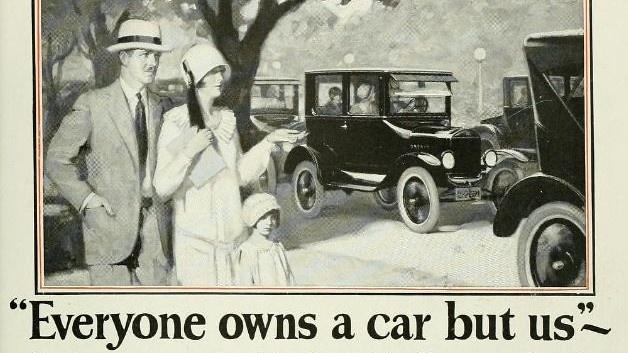
 The 1920s is characterized by consumerism. Mass production becoming more common meant that items were cheaper, and the middle class with extra money to spare could finally afford luxuries, of which there were a plethora of options. Appliances, cars, fashion, cosmetics, magazines, and radio were all available. But how were they to choose what to buy? With tons of advertising of course! Advertisers now tried their hardest to glamorize products and convince people that “of course this product will give you this exact glamorized lifestyle that I’m presenting to you.” And guess what? That glamorized lifestyle was a good one, especially after the impact that WWI left behind. Of course people want to escape those memories. People were isolated by WWI. Their previous images of war and idealism were destroyed. Materialism and pursuit of that glamorized lifestyle was a way to escape.


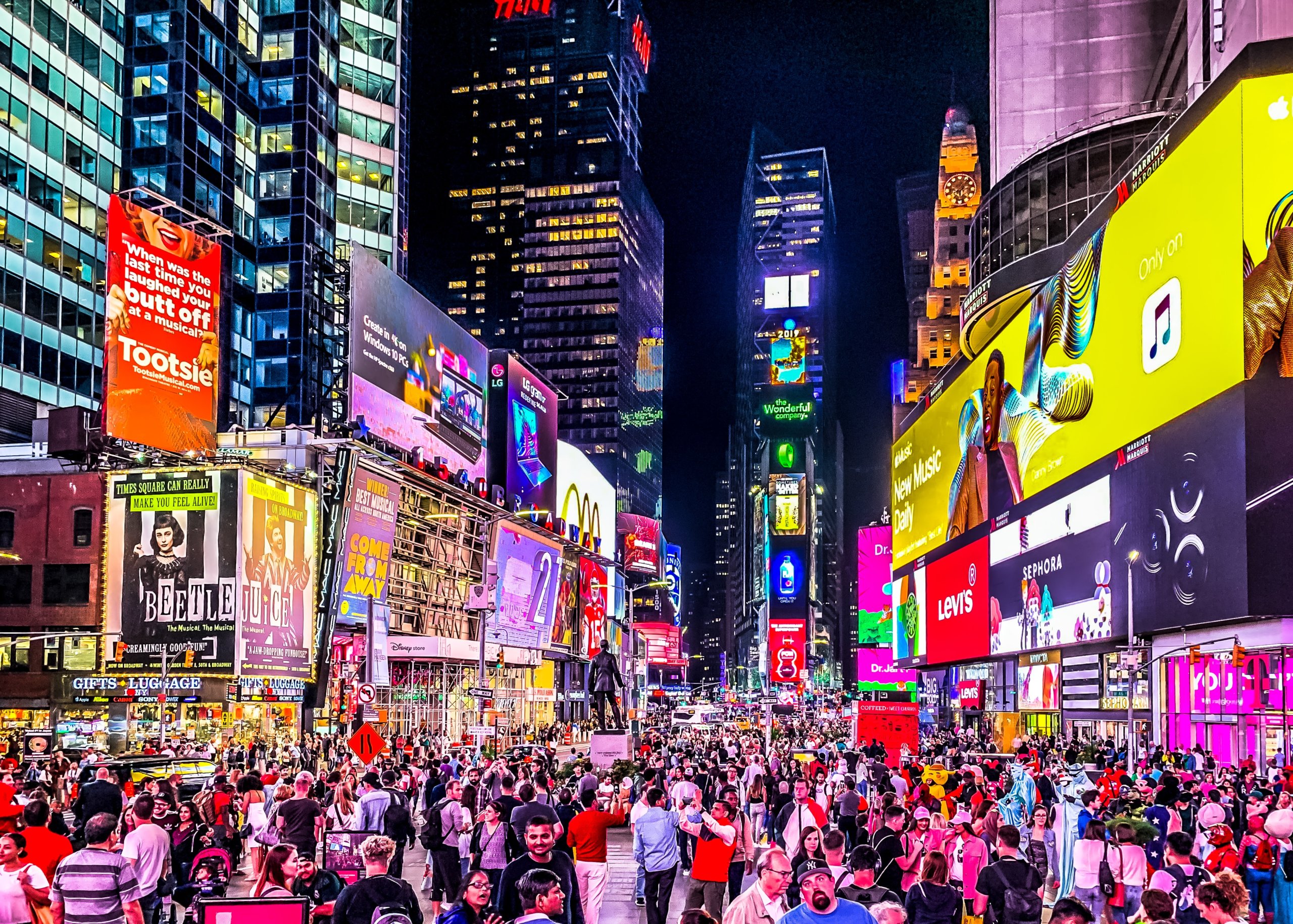
In the 2020s, you can’t escape ads. They are EVERYWHERE. No matter where you look, there they are. And you think one or two ads is bad enough when you get them on your phone? Just go take a look at Times Square. That’s the final boss of ads. These are just the obvious ads too. Social media contains so much subtle advertising that only furthers consumerism in the modern era. People are constantly buying mass hauls of everything, and if you want to keep up, you have to buy those products too. After all, that influencer seems to be living such a healthy, happy life, so if I replicate her, I’ll be living that same life. The problem is…I’m not her. Sure, maybe some of her habits might translate well into my life, but I just can’t seem to do everything she can. And that just makes me feel worse, because it seems like everyone is doing just fine. This is that start of a spiral that is one of the major causes of the loneliness epidemic, as outlined by the former US Surgeon General. Just like the 1920s, the 2020s is filled with isolation that stems back to the COVID-19 Pandemic. During this time, isolation was forced, with our only connection being via the Internet. When you aren’t able to connect as often with people in your own life, you turn to social media. Social media provides an escape to the isolation, an algorithm constantly feeding you dopamine and promises of a better life with just one product.